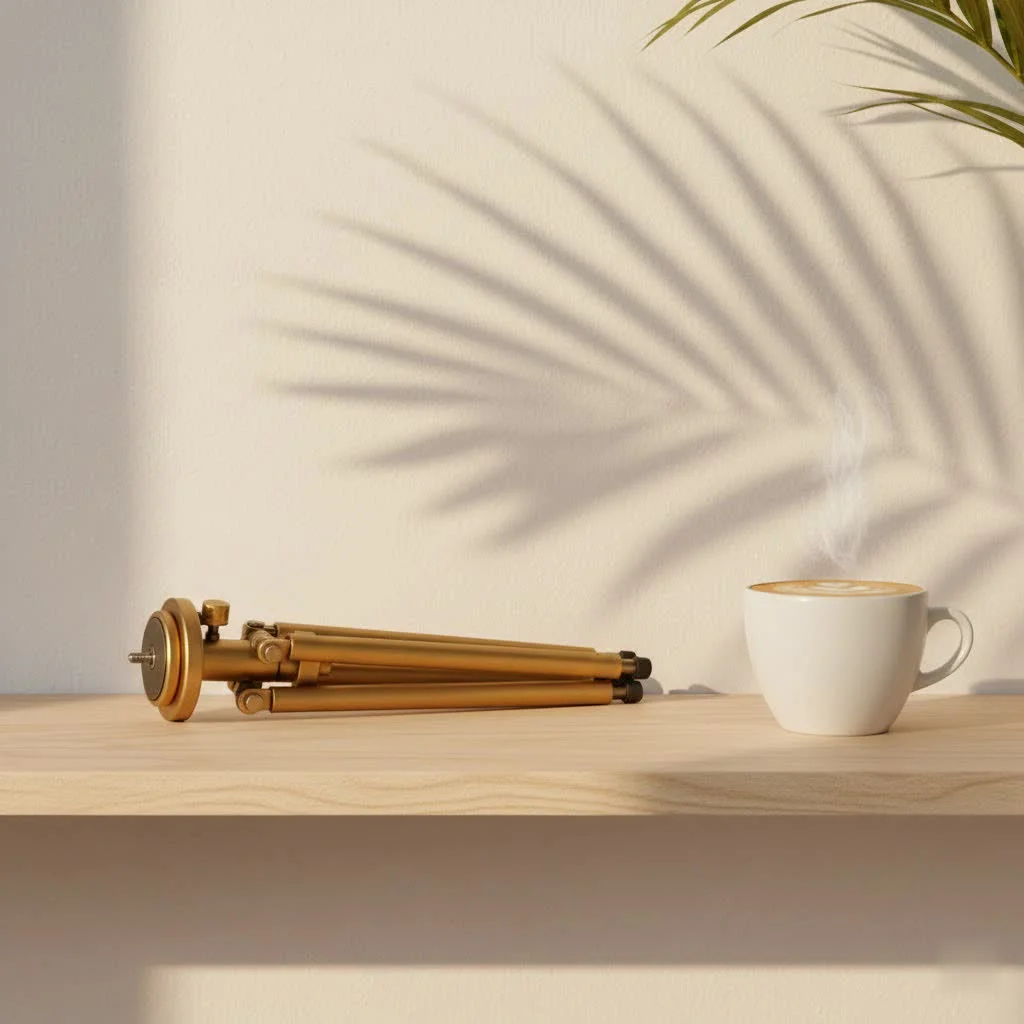
A small tripod stand is essential gear for creators, offering portability, enhanced stability, and versatility for various creative angles and situations. These compact supports are game-changers for photographers, videographers, and content creators who need reliable stability on the go, enabling sharper photos, smoother videos, and unique perspectives that handheld shooting often cannot achieve.
Why Every Creator Needs a Small Tripod Stand
- Portability: Small tripods are designed for on-the-go shooting, easily fitting into camera bags or backpacks.
- Enhanced Stability: They provide a stable base, crucial for sharper photos, especially in low light, and smoother, professional-looking videos.
- Versatility: These stands allow for diverse creative angles, including low-angle shots, and can be used in various situations from product photography to vlogging.
Decoding the Different Types of Small Tripod Stands
The Mighty Mini Tabletop Tripod
- Compact Design: Ideal for desks, low-angle shots, and product photography due to their minimal height.
- Limitations: Primarily restricted by their inherent low height, making them unsuitable for eye-level shots without an elevated surface.
The Adaptable Extendable Travel Tripod
- Increased Height: Offers more vertical reach than tabletop models, making them suitable for vlogging, landscapes, and group photos.
- Balance: Provides a good compromise between extended height and portability, often folding down compactly.
The Flexible GorillaPod-Style Tripod
- Unique Legs: Features bendable legs that can wrap around objects or adapt to uneven surfaces, offering creative mounting options.
- Best Use: Excellent for action cameras, creative angles, and securing cameras in unconventional spots.
Smartphone-Specific Tripods
- Tailored for Phones: Designed specifically for mobile devices, often including integrated clamps and Bluetooth remotes.
- Compatibility: May have limited compatibility with larger cameras or other photography gear.
Essential Features: What to Look for in Your Small Tripod Stand
Load Capacity: More Than Just a Number
- Explanation: This specifies the maximum weight the tripod can safely support without tipping or instability.
- Recommendation: Always choose a tripod with a load capacity 20-30% higher than the combined weight of your camera, lens, and any accessories.
- Real-world Example: If your camera and lens weigh 3 lbs, opt for a tripod with at least a 3.6-4 lb capacity.
Height and Adjustability: Finding Your Perfect Angle
|
Our Picks for the Best Tripod Stand in 2026
As an Amazon Associate I earn from qualifying purchases.
|
||
| Num | Product | Action |
|---|---|---|
| 1 | 64” Tripod for Cell Phone & Camera, Phone Tripod with Remote and Phone Holder, Sturdy & Stable Height Adjustable Multi-Angle Shot Selfie Stick Tripod for Video Recording |

|
| 2 | TONEOF 68\" Magnetic Selfie Stick Tripod with Aluminum Strong Magnetic Holder for Magsafe, 360° Rotatable Travel Phone Tripod Stand with Metal Ring & Rechargeable Remote for iPhone/Android(Beige Gray) |
|
| 3 | IFOOTAGE RB-A400 Round Base Light Stand Monopod, 79\" Tripod Monopod for Cameras, Lights, Webcam, Live Streaming, Vlogging, Payload 22LBS |
|
| 4 | Projector Stand Tripod Adjustable, Laptop Height from 23.5 to 46.5 inches with Gooseneck Phone Holder, Floor for Office, Home, Stage, Studio, DJ Racks Holder Mount, 23.5inch-46.5inch |
|
| 5 | Amazon Basics 50-inch Lightweight Portable Camera Tripod Stand with Quick-Release Plate, Adjustable Height, Aluminum, for Travel Photography, Champagne |
|
| 6 | SENSYNE 62\" Phone Tripod & Selfie Stick, Extendable Cell Phone Tripod Stand with Wireless Remote and Phone Holder, Compatible with iPhone Android Phone, Camera |
|
| 7 | Laptop Tripod Stand – Adjustable Laptop Holder with Phone Mount - Heavy- Duty Alloy Tripod Stand with Tray - Height Adjustable 0.65–1.6m - Portable, Foldable, 15kg Load Capacity - Black |
|
| 8 | 71” Phone Tripod & Selfie Stick, Portable All in One Extendable Cell Phone Tripod Stand, with Wireless Remote Control for iPhone/Samsung/Android/Camera |
|
| 9 | CAMBOFOTO 74\"-Camera-Tripod, Professional Aluminum Tripod/Leg Stand Mirrorless Camera/DSLR/Cell Phone/Camcorder/GoPro, with Phone Holder and Travel Bag (Gunmetal Gray) Weight 2.8 lbs Load 8.8 lbs |
|
| 10 | EUCOS 62\" Phone Tripod, Tripod for iPhone & Selfie Stick with Remote, Extendable Cell Phone Stand & Ultimate Phone Holder, Solidest Phone Stand Compatible with iPhone/Android |
|
- Range: Consider both the minimum height for low-angle shots and the maximum height for versatility.
- Mechanisms: Look for easy-to-use leg sections and quick-release mechanisms for efficient setup.
- Head Types: Ball heads offer versatile movement, pan-tilt heads provide precise control, and flexible joints are found on GorillaPod-style tripods.
- Orientation: Ensure the tripod supports both vertical and horizontal shooting.
Portability & Build Materials: Your Travel Companion
- Lightweight Materials: Aluminum offers a good balance of strength and weight, while carbon fiber is lighter but typically more expensive.
- Folded Size: A compact folded size is crucial for easy packing and transport.
- Durability: Prioritize metal joints and sturdy construction over flimsy plastic components for long-term reliability.
Stability is Non-Negotiable
- Key Elements: Sturdy legs, non-slip rubber feet, and a well-designed center column contribute significantly to stability.
- Testing: Gently press down on the camera when mounted to check for wobble or flex.
Compatibility: One Stand, Many Devices
- Standard Screw: Most cameras use a standard 1/4″-20 screw mount for universal compatibility.
- Phone Clamps: If using a smartphone, ensure the tripod includes an adjustable and secure phone clamp.
- Accessory Mounts: Cold shoe mounts are useful for attaching external microphones or LED lights.
Maximizing Your Small Tripod Stand for Creative Photography
- Low-Angle Shots: Position the tripod directly on the ground for unique perspectives in macro or landscape photography.
- Uneven Surfaces: Utilize flexible leg designs or individually adjustable legs to stabilize the camera on challenging terrain.
- Time-Lapses/Long Exposures: A stable tripod is indispensable for capturing sharp, blur-free images over extended periods.
- Vlogging Grip: Many small tripods can double as a comfortable handheld grip for vlogging or run-and-gun video.
Nurturing Your Gear: Care and Maintenance Tips
- Cleaning: After outdoor use, wipe down legs and joints to remove dirt, dust, or sand.
- Checks: Regularly inspect screws and joints for tightness and wear to prevent malfunctions.
- Storage: Store your tripod in a dry, clean place, ideally in its protective bag, to prolong its lifespan.
Expert Insight: What a Pro Thinks
- “Investing in a quality small tripod stand isn’t just about stability; it’s about unlocking creative potential you didn’t know you had. From low-angle macros to stable vlogs on the go, the right compact support transforms your photographic journey.” – Elias Vance, Senior Photography Gear Analyst at SxJks.com
Frequently Asked Questions About Small Tripod Stands
- Can a small tripod stand hold a DSLR?
- What’s the best small tripod stand for an iPhone?
- Do flexible tripods work on all surfaces?
- How tight should I screw my camera onto the tripod?
- Are carbon fiber mini tripods worth the investment?
Conclusion: For more tripod stands guides on this site.
A small tripod stand is an invaluable tool for any creator, offering enhanced stability, portability, and creative versatility. By carefully considering load capacity, height, materials, and compatibility, you can choose the ideal compact support to improve your photography and videography. Experiment with different angles and techniques to unlock new creative possibilities.
Frequently Asked Questions
Can a small tripod stand hold a DSLR camera?
Yes, many small tripod stands can safely hold a DSLR camera, provided their load capacity exceeds the combined weight of your camera body and lens. Always check the manufacturer's specified maximum load capacity, ensuring it's at least 20-30% higher than your gear's total weight for optimal stability.
What is the best small tripod stand for an iPhone?
The best small tripod stand for an iPhone typically features an integrated, adjustable phone clamp and often includes a Bluetooth remote for convenient shooting. Models like the Joby GripTight ONE GP Stand or specific smartphone-tailored tripods offer excellent stability and functionality for mobile photography and videography.
Do flexible tripods work effectively on all surfaces?
Flexible tripods, such as GorillaPod-style models, are highly effective on a wide variety of uneven surfaces and can even wrap around objects like poles or branches. Their bendable legs allow for creative positioning and stability where traditional tripods might struggle, making them very versatile for outdoor and unconventional shooting environments.
How tightly should I screw my camera onto a tripod?
You should screw your camera onto the tripod plate firmly until it is secure and there is no wobble, but avoid over-tightening. Over-tightening can strip the threads on either your camera or the tripod plate, potentially causing damage. A snug fit that prevents rotation is sufficient.
Are carbon fiber mini tripods a worthwhile investment?
Carbon fiber mini tripods are generally a worthwhile investment for creators prioritizing lightweight portability and durability. While often more expensive than aluminum alternatives, carbon fiber offers superior strength-to-weight ratio, making them ideal for travel and reducing fatigue during long shoots, especially when carrying other gear.
Get our weekly buyer guide
Practical specs, not advice. Unsubscribe anytime.
This guide was exactly what I needed to understand the different types of small tripods. I do a lot of macro photography, and getting a stable base for those super close-up shots is absolutely crucial. The details on how these stands enable sharper photos really resonated with me. My new compact tripod has made a huge difference in reducing blur and getting crisp, detailed images.
As a vlogger, I really appreciated the section on versatility and getting unique perspectives. I’ve been using a gorillapod-style small tripod for a while now, and it’s great for wrapping around things or getting those low-angle shots. It’s definitely improved the quality of my videos, making them look much more professional than just handheld. Thinking about upgrading to one of the more robust tabletop options next.
The info on enhanced stability was helpful, especially for low-light situations. I picked up a mini tripod based on the recommendations, and while it’s mostly good, I found the ball head a little stiff to adjust precisely. It’s fine for quick shots, but for more intricate product photography, it takes a bit of fiddling. Still, it’s super compact, which is a plus.
I’ve been looking for a good small tripod stand for ages, and this guide really helped me narrow it down. The portability aspect was huge for me since I do a lot of hiking photography. I ended up getting one of the recommended carbon fiber models, and it’s been fantastic for getting those sharp landscape shots without adding much weight to my pack. Definitely a game-changer for my outdoor adventures.